
Article: Saving Lives with Words

Saving Lives with Words
Saving Lives with Words by Anthony "Doc" Bevers
In my 15 years working as a medical professional, I have found myself in my off time standing in classrooms, auditoriums and conference rooms talking about the basics of hemorrhage control and airway management to professionals that while expected to conduct some type of medical treatment, were not medically trained. These are our first responders and they are most of the time the first on the scene therefore, the most important aspect of our medical system. We cannot however, limit the title and prestige of first responder to our civilian emergency services brethren. We must also consider our non-medical military service members who are exposed to enemy actions and training and wartime accidents. These were my first students.
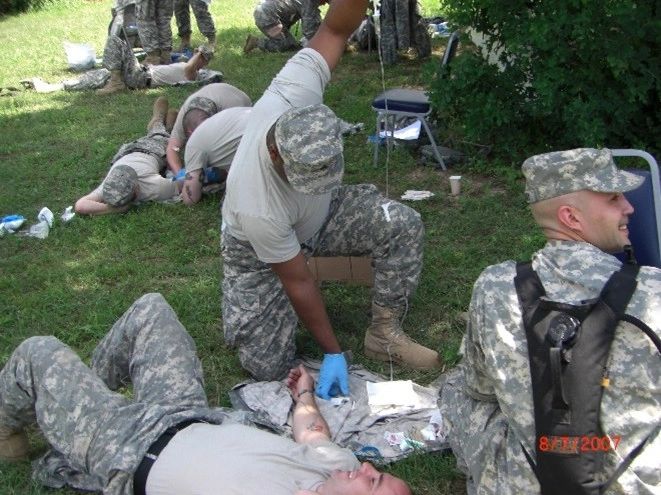
In 2006, I was a Private First Class in the Army working as a field medic and one of my first big assignments was being apart of a team putting on a Combat Life Saving for over a 1,000 Soldiers gearing up to go to the Texas/Mexico Border. I had conducted hip pocket training as assigned by my medical NCOs or as requested by Platoon Sergeants and I did enjoy teaching what I knew to others, but this was my first large teaching assignment. For those of you who do not know, the Combat Life Saver course is the Department of Defense’s answer to high rates of combat fatality due to hemorrhage, airway compromise and tension pneumothorax (air in the chest causing a type of shock). The CLS course’s implementation DoD wide has saved thousands of lives on the military side and the implementation of its concepts in the United States is also slowly changing the way we deal with trauma as a society.
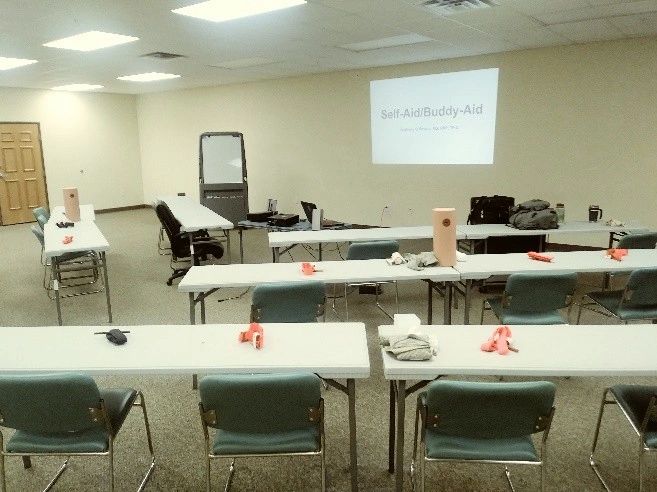
I felt intimidated though, I had never even been deployed to a combat zone and even worse, I could still count the number of patient contacts I had as I was fairly new to medicine and the military. In the Army however, there is a measure of respect for medics, especially in Combat Arms and I was given the same amount of respect as any other medic. I could see this on the faces of the students and hear it in their questions. Somehow, I was considered an expert, even though I was barely a novice. But unknown to me at the time, I was making a huge impact.
I would notice this impact when I was called for another round of CLS training a year later when I volunteered for my first tour to Iraq. I was assigned as a medic to Bravo Company 3-144 Infantry but was still tasked with aiding in the training of the entire battalion during the pre-deployment train up. I found myself with a little more experience but still a novice, but I was deploying with a lot of the same guys I was on the border with and many of them still remembered well the things I had taught them. This fact caught me off guard. The man who would later be my Platoon Sergeant in 3rd Platoon, told me I was a knowledgeable and effective instructor and his platoon, had taken a liking to me.
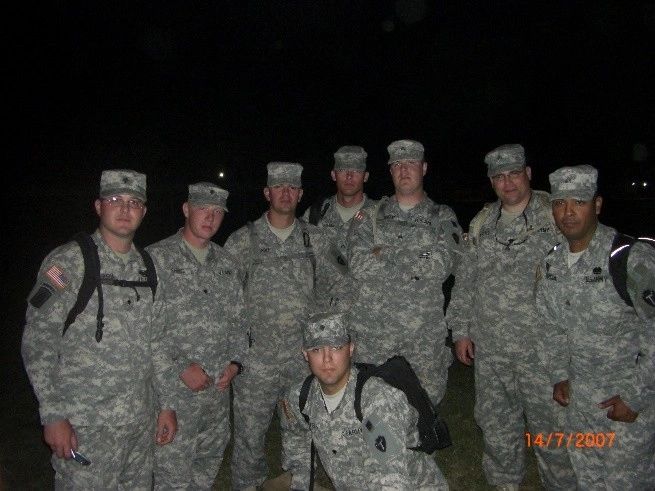
Thus, I would be assigned to 3rd Platoon and whenever I had a chance, I would do training for the guys. We did a lot of training, so much so that they were rehashing my teachings well when told to do so by their NCOs. I even had a few guys I called “Super CLSs”. Due to their increased curiosity in combat medicine, I decided to teach them more knowledge and skills that were above the skill set of a CLS. There came a time however, they started to avoid me jokingly because I was always drilling someone about a medical task. Their NCOs tolerated me seeing the importance of what I was talking about even though I myself, in my immature, inexperienced state did not. I enjoyed teaching, that was really the point of it for me. Outside of the movies, combat and malicious violence were still foreign concepts to me.
A few months into the deployment, all of the 3-144’s medics were pulled from the battalion and placed into a detachment to help with the shortage of medics other units came into theater with and I found myself going with units I had not trained with nor did I know. Some units were high speed, others not so much and others still, I preferred not to be attached due to poor leadership and even poorer moral. Very few were interested in listening to a medic talk about medical skills.
There were only a few times I was able to go out with my original platoon and those were some very good times, but I was mostly whored out to other battalions and we had a high operation tempo. Despite this, if I saw an opening with 3rd platoon or anyone from Bravo Company for that matter, I would try to steal that from the medic assigned or get placed before someone was assigned which worked out some of the time. This saw me out on the road most of the deployment with over 100 long range, multi day missions in the nine months I was in theater that time. Sure, I was tired but just as I am today, I was often overly motivated and enjoyed the work and the opportunity to be there for our guys if something did happen out of the wire. I was really wasting my time, motivation and skills watching movies on post.
There came a day though my newly assigned Platoon Sergeant said “NO” to my going out with third platoon even though I had not yet been assigned to a unit. I had just returned from a mission within 12 hours and he made me wait a day before going out on another mission. This happened to be the day 3rdPlatoon would find itself in a bad place.
To set this up a little more, we had some individuals who had civilian credentials for EMT Basic but were not military trained medics however, due to our shortage of medics, the unit asked for volunteers with these credentials to work as medics for missions. This did not settle well with some of the military medics as these EMTs had not trained as we had to get to this point and most importantly, did not have our mindset. There was a territorial aspect to it I will admit, and I felt that as well. To me, they had not earned the right to be called “Doc”. I can say from experience that EMT and Paramedic school does prepare you well for prehospital medicine, but it does not prepare you for combat medicine where the golden hour may not exist.
After a small confrontation with the Platoon Sergeant for the detachment over the issue of not going out with 3rd Platoon, I made the nearly mile long walk back to my Living Area which is not much but with 100 lbs of gear and already being tired and a little depressed to be stuck on post, it was a long haul. I had just entered my room when the first explosion occurred and then a really large one after that followed by a few smaller explosions. I had a feeling it was 107 millimeter rockets which, was one of the weapons of choice for the insurgents in those days due to its ease in remote detonation. The insurgents could set a timer and run off well before the ordinance was launched and therefore avoid our counter battery fire.
When Indirect Fire (IDF) was incoming, the policy was to get your gear and run to the bunkers but due to the notorious inaccuracy of indirect fire, most of us just took our chances and continued life as usual. You could always tell a new guy because they would haul to the nearest bunker. I was one of those and I went about my morning as if nothing had occurred. I wasn’t wanted for nearly 24 hours and I was going to read and sleep and munch on the beef jerky I had receive in a care package.
It wasn’t until 0800 the next morning when we were required to muster at the medical detachment office that I learned it was 3rd Platoon who had taken the hit. I was instantly mortified. The detachment Platoon Sergeant told us 3rdPlatoon was going through a checkpoint when the 107 mm rockets hit in the immediate area, impacting a truck that was carrying combustibles. There were several casualties, none of the military; they were all contractors and a couple of gate guards. That was all I heard initially.
I saw one of 3rd Platoon’s guys later that day and he told me the story. The truck that was hit instantly exploded and was just a ball of fire. Several people were on fire or down from the blast and its shrapnel. The medic, one of the EMTs placed in a situation for which he did not have the training, got out of the vehicle and just started vomiting and was quickly determined to be useless on scene. The 3rd Platoon Soldiers secured the scene and started treatment. They had used everything I had taught them, and I was being thanked by this Soldier for taking the time to train them. As I ran into more of 3rd Platoon over the next week, I was thanked multiple times for the work I had done with them. I could not have been more proud of that group of guys.
It wasn’t until several weeks later that in a moment of self-pity, I remarked to one of the 3rd Platoon guys that I wish I had been there. He said “Bro you were there. With all the training you did for us, you might as well have been there”. This was my moment of clarity. Even if I am not on the scene, I can still save lives. I was renewed and doubly motivated to spend my spare time in between missions training non-medical Soldiers how to stave off death until the injured could make it back to definitive care.
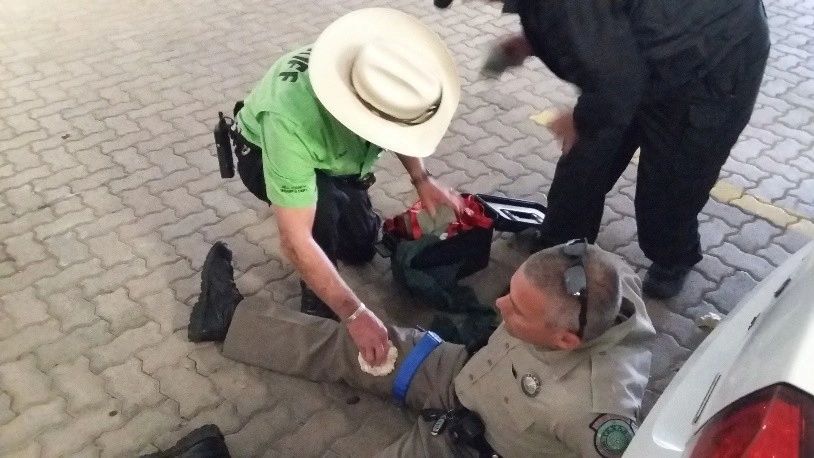
Since that time, I have had the opportunity to teach Combat Life Saving to hundreds more Soldiers and Airmen. I know some of them used their training off duty and they had a CLS bag in their vehicle for that use. During class I would often challenge the students asking what kind of first aid gear they carried in their personal vehicles and also if they were ready for a life threatening situation outside of work. In the years since 2006, I have been apart of training many more Soldiers and Airman and at least a 1,000 police officers and federal agents in the Tactical Combat Casualty Care skillset. I know for a fact, some of them used their training and know of two that went on to EMT school because of the training I did. As one officer put it, it was not so much the training I did more than it was the emotion and effort that I put into every class I put on.
In one law enforcement department where I have been involved in for several years, I had a senior official come to me and tell me that after the last course I did for the department, he went home and bought “high speed” first aid kits for each car in his family and each member of his family was now knowledgeable in the use of all the equipment. He mentioned to his shift just before the training, “We are not here for our job, we are here for our families. You might need to use this training at home one day.” There was another officer who had placed several tourniquets in one incident. He was not in class that day but there for another reason but he took the time to tell his story to the student and stress the importance of the training that was going on that day. Within a week of training another department, an officer involved shooting resulted in an injured officer, there were several other officers on scene trained and equipped to treat the wound. It is stories like these that keep me wanting to put on more training.
As a paramedic, I get to make a difference one patient at a time which makes that profession honorable and worthwhile, but it is exhausting and the impact is small on the grand scheme of things. Teaching for eight continuous hours to 20 or more students is also exhausting because just like my patients, I put in 110% effort into my work, but the difference is potentially huge, and it is due to the numbers. I will always be a medical practitioner; I never just want to be an instructor. When I finish medical school (I need to start first) and residency for Emergency Medicine, I will spend as much time teaching as my wife will allow outside of work.
There is a quote by Chief Tecumseh that stands out for me, “Seek to make your life long and its purpose in the service of your people”. This quote exemplifies everything I work toward, it also is the overarching drive for my efforts. Passing on knowledge is also becoming of a professional, I believe you cannot be a true professional until you start to pass on your knowledge to others. You will not always be there to practice your knowledge and skills so it is incumbent upon you to find those who will listen and bring them to your level.
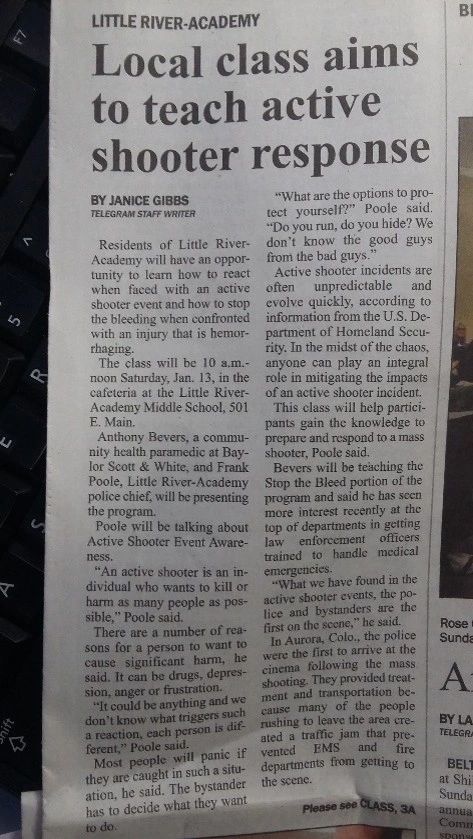
My challenge to any who read this is to take the time, even if the time is small, to teach someone something. If you are medical practitioner, the Stop the Bleed campaign is easy to get into and there are always courses being put on nearly everywhere, if you did not want to start your own course. However if you wanted to start your own courses in Texas, the Regional Advisory Councils have all the gear you need, just check it out from them. The courses are two hours long and can be taught to anyone. I have focused on organizations such as churches, Boy Scouts, and municipalities. I have found it is much easer to approach the leader of an organization and get a potentially large crowd as opposed to putting public information out for a course in hopes people will show up. In short, you get more bang for your buck if you approach an organization. Additionally, tell the local news agencies you are doing the training. Coverage of some of my courses resulted in people calling to set up courses for their organizations as well.
One last thing about training: Be excited for your topic! Think of all the good things that can come out of your time teaching: the lives that could be saved, families not completely destroyed by devastating incidents, and individuals who go on to living a full and fruitful life. If you are a doctor, nurse, paramedic or EMT, you are not as important as the person who first puts on a tourniquet or puts pressure on that bleed and they may not know how to do so until you teach them.
Thank you for reading. Stay safe.
"Doc"
Leave a comment
This site is protected by hCaptcha and the hCaptcha Privacy Policy and Terms of Service apply.