

Training for Preventable Death and Beyond
Written by "Doc"
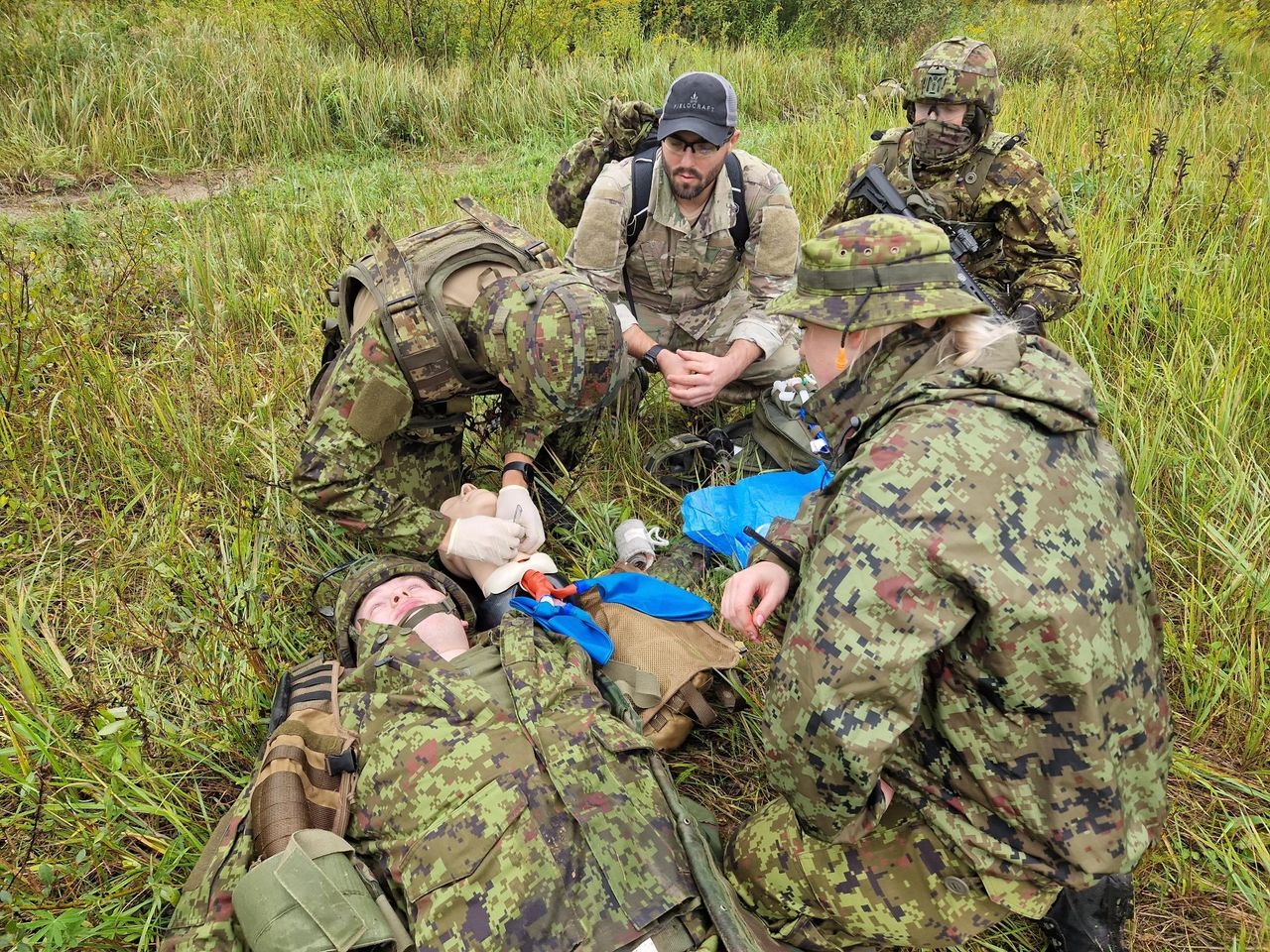
Some weeks ago, I spent a considerable amount of time preparing for and executing two Self-Aid/Buddy-Aid courses for local Law Enforcement and while only 11 individuals were able to sign up for the courses, I was ecstatic to have the opportunity to pass on some of the knowledge and passion I have for preparedness and preventable death education.
What is preventable death? If you are a human, death is not preventable, but we can definitely prevent an early death through prevention, mitigation and trained responses to emergencies. Preventable death in this context is defined through uncontrolled hemorrhage, airway compromise and tension pneumothorax. These three and most especially the first cause of preventable death in the prehospital environment can be treated at the “10 Level” as is know as the basic level of skill proficiency that every Private in the Army is expected to perform.
A study conducted by Eastridge et al in 2013 found 87% of combat casualties die before reaching a medical treatment facility (MTF) and there was a considerable number (24%) who died from preventable causes of death such as hemorrhage. The 2016 data from the Center for Disease Control (CDC) shows that over 150,000 people died as a result of trauma and of those, 30,000 deaths were potentially preventable as they were from loss of blood.[i]
Medical professionals are not always on scene nor can they get there in time to treat hemorrhage that can kill in as little as three minutes. This leaves the bystander and law enforcement to this work. People who are on scene when traumatic incidents occur do try to do something as there were many improvised tourniquets placed on the scene of the Boston Marathon bombing in 2012, but these are not always effective. I was told a story of a massive hemorrhage in Central Texas that should have received a tourniquet but a towel was just held in place until EMS arrived on scene, by that time, the patient was ashen in color and exsanguinated.
Again, this is not to bash the efforts made but instead to advocate for the continued training of our non-medical assets in our region. People have left a class I have taught and placed a tourniquet within a week in one case and packed a wound within a month of the course in the other case.
In my current work, I only have 30 days home every few months and instead of spending time with my family, I spent a little time working to pass on knowledge. It’s a sacrifice that I willingly make and one that my family tolerates. This is a healthy addiction for me and I wish I could pass this on to others but so far, I have largely failed in this endeavor.
Everyone has a different inspiration and mine started while I was in the military when students from a Combat Life Saver course I taught went on to save the lives of several American citizens who were injured in enemy action. From that point on, I knew a deep-seated purpose that has lasted through my adult years. I wasn’t there but I saved lives that day. For me, this was and still is the inspiration and when I feel it dwindle somewhat, I hear about another student of mine doing something great. I only wish I could pass on the feeling of that knowledge to others.
For those of you who have read to this point, I encourage you to give back to your profession; you may not be a medical professional or even in emergency services. We are not fully complete as a professional or as a human if we have not reached the point where we are working to bring others to our level. Once you have climbed to the highest level, it is your duty to turn around and hold out your hand to help another to where you are.
[i]Berwick, D;Downy, Downey, A; Cornett, E. A National Trauma Care System: Integrating Military and Civilian Trauma Systems to Achieve Zero Preventable Deaths After Injury. https://www.nap.edu/catalog/23511/a-national-trauma-care-system-integrating-military-and-civilian-trauma. Published in 2016. Accessed on June, 13th, 2018.
Leave a comment
This site is protected by hCaptcha and the hCaptcha Privacy Policy and Terms of Service apply.