
Article: Why Every Prepared Citizen Should Learn Self-Aid / Buddy-Aid Skills

Why Every Prepared Citizen Should Learn Self-Aid / Buddy-Aid Skills
Why Every Prepared Citizen Should Learn Self-Aid / Buddy-Aid Skills
Emergencies rarely happen when it’s convenient. Whether it’s a serious accident, medical emergency, or unexpected violent incident, the first few minutes often determine the outcome. In those moments, the ability to provide immediate self-aid or buddy-aid can save a life.
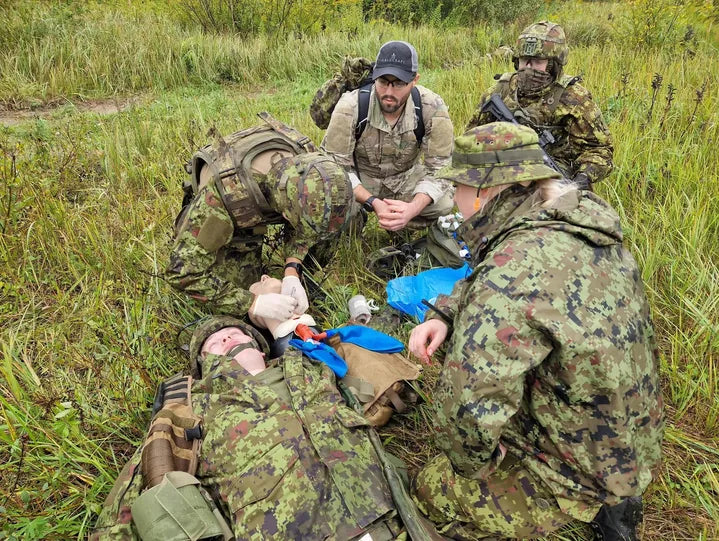
Self-Aid / Buddy-Aid (SABA) training focuses on life-saving medical interventions that can be performed before professional medical help arrives. These skills are not limited to military or law enforcement professionals — they are increasingly relevant for responsible civilians, families, church safety teams, and prepared citizens.
What Is Self-Aid / Buddy-Aid (SABA)?
Self-Aid / Buddy-Aid refers to the ability to treat yourself or others during a medical emergency, particularly when dealing with life-threatening bleeding. SABA principles are rooted in Tactical Combat Casualty Care (TCCC) but adapted for civilian and everyday emergency situations.
The goal is simple:
Prevent avoidable loss of life by controlling bleeding and stabilizing casualties until advanced care arrives.
Key concepts taught in SABA training include:
-
Rapid assessment of injuries
-
Hemorrhage control
-
Tourniquet application
-
Wound packing
-
Decision-making under stress
These are practical, hands-on skills that can be applied at home, at work, or in public spaces.
Why Hemorrhage Control Matters
Uncontrolled bleeding is one of the leading causes of preventable death in traumatic injuries. In many cases, bleeding can become fatal within minutes — long before EMS can arrive.
SABA training emphasizes:
-
Identifying life-threatening bleeding
-
Knowing when and how to intervene
-
Applying proven techniques quickly and safely
Programs like Stop the Bleed have shown that trained bystanders dramatically improve survival outcomes. SABA training builds on this foundation by adding realistic context and hands-on repetition.
Who Should Take Self-Aid / Buddy-Aid Training?
SABA training is valuable for a wide range of people, including:
-
Responsible civilians and families
-
Church and organizational safety teams
-
Armed professionals and security personnel
-
Anyone interested in emergency preparedness
-
Individuals carrying medical kits or IFAKs
No prior medical training is required. The focus is on clarity, confidence, and competence, not memorization or certifications.
Hands-On Training Makes the Difference
Reading about emergency care is not the same as performing it under pressure. A structured SABA course provides:
-
Instructor-led demonstrations
-
Hands-on practice with real equipment
-
Scenario-based learning
-
Immediate feedback and correction
This type of training builds muscle memory and confidence, ensuring students can act decisively when seconds matter.
Self-Aid / Buddy-Aid Training in Central Texas
Haven Defense Group offers Self-Aid / Buddy-Aid (SABA) Emergency Hemorrhage Control Training designed for real-world application. Courses are taught by experienced instructors in a controlled, professional environment with a focus on safety and practical skill development.
👉 Learn more or register here:
Self-Aid / Buddy-Aid (SABA) – Emergency Hemorrhage Control Training
Our training serves students throughout Central Texas, including Watauga and surrounding communities.
Preparedness Is a Responsibility
Preparedness is not about fear — it’s about responsibility. Learning self-aid and buddy-aid skills equips individuals to protect themselves, their families, and those around them when it matters most.
The question isn’t if emergencies happen — it’s whether you’re prepared when they do.
Leave a comment
This site is protected by hCaptcha and the hCaptcha Privacy Policy and Terms of Service apply.